Key takeaways
- Rust on arrival is a packaging failure, not a coating failure. A container crossing an ocean cycles through its dew point twice a day; anything packed damp will rust no matter how good the powder coat is.
- Use four layers, not one. Contact wrap, sealed moisture barrier, desiccant sized to the volume, and a crate that carries the load. Any one of them alone will let you down.
- Size the desiccant by volume and voyage, not by habit. Roughly one 33 g unit per cubic foot of sealed volume for a 4–6 week transit; add 50% for tropical routing or a Panama transit.
- Match the VCI to the metals in the crate. A ferrous-only VCI film can accelerate corrosion on aluminium and copper alloys. Mixed-metal orders need a multi-metal formulation.
- Nothing may move. Most transit damage on sheet metal is rub damage from parts shifting, not impact damage from a single event.
- Photograph every stage. When a claim happens, the packing photos are the only evidence that decides who pays.
A European customer received 40 outdoor telecom cabinets that had left Shenzhen bright and dry. Six weeks later nine of them had orange bloom along the bottom return flange and across the door edges, and the receiving inspector rejected the whole pallet. Nothing had gone wrong in fabrication — the coating was intact under the rust, and the DFT report was in the file. What had gone wrong was a crate lined with plain cardboard, four desiccant sachets for six cubic metres, and a steel strap that had rusted against the very steel it was holding. Enclosure export packaging is not a logistics afterthought; it is the last manufacturing operation, and it is where quality is either preserved or destroyed.
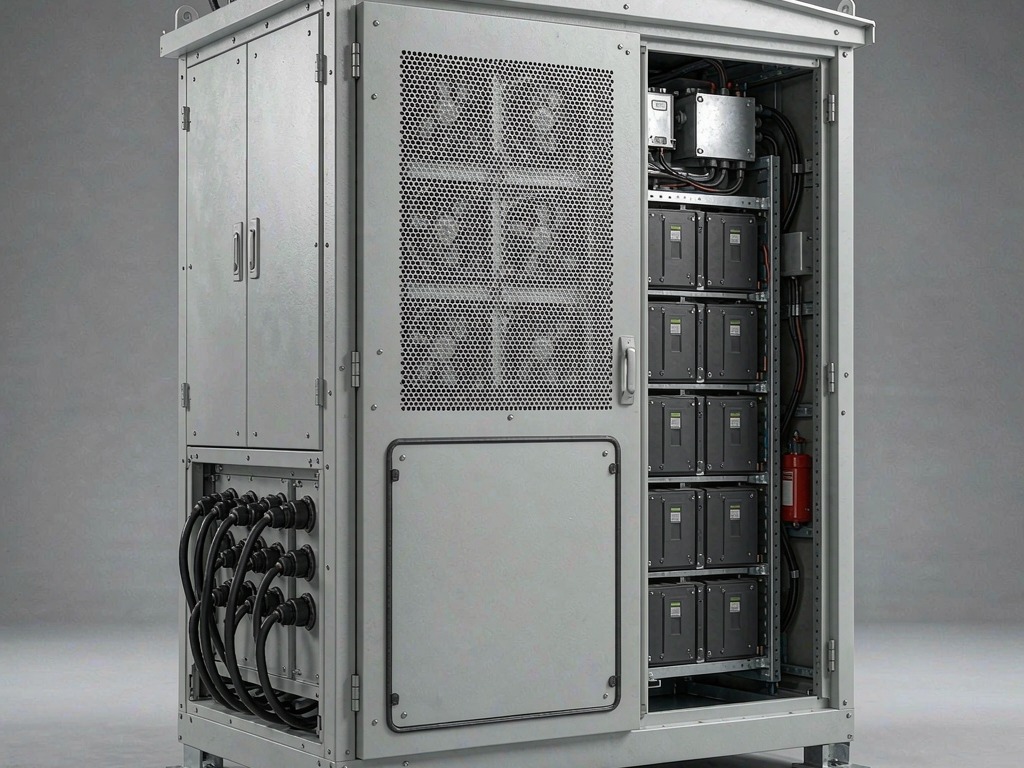
This guide is the packing specification we apply to every enclosure that leaves our dock, written for buyers who have to justify a freight claim, an incoming inspection rejection, or a storage decision. It covers the two corrosion mechanisms that actually cause damage, the five-layer stack and what each layer is for, how to size desiccant and choose a VCI, how a crate has to be built to carry an enclosure, the loading and lashing rules, and the photo gate we use as a release checkpoint. It sits alongside our quality control and inspection guide as the second half of the same argument: inspection proves the part was right, packaging proves it arrived right.
The Two Mechanisms That Actually Damage Cargo
Container rain. A container on deck heats to 60 °C by day and cools overnight. When the steel shell drops below the dew point of the humid air inside, water condenses on the underside of the roof and drips onto the cargo. On a six-week voyage through a tropical routing this happens dozens of times. Nothing about a powder-coated enclosure protects it from water that falls on it every night for forty days.
Contact corrosion. Two things make it worse, and both are self-inflicted. The first is hygroscopic packing material: plain cardboard and untreated kraft paper hold moisture against the metal and are mildly acidic. The second is dissimilar contact — a carbon steel strap on a stainless cabinet, a zinc-plated bracket resting on an aluminium panel, or bare hands on a machined surface, since a fingerprint is a salt deposit. The physics behind that last one is set out in our galvanic corrosion guide.
The Five-Layer Export Stack
| Layer | What it is | What it does | Typical cost per crate |
|---|---|---|---|
| 1. Surface protection | PE protective film on panels, or VCI paper interleaving | Stops rub damage and fingerprints; cushions finished faces | $3–12 |
| 2. Corrosion inhibition | Multi-metal VCI film or emitter (e.g. VpCI-126 film, VpCI-146 paper) | Releases inhibitor vapour that bonds to every exposed surface, including cavities a coating cannot reach | $6–25 |
| 3. Moisture barrier | Heat-sealed PE or foil laminate liner, 150–200 µm | Keeps external humid air out of the micro-climate | $8–30 |
| 4. Desiccant | Silica gel or clay, sized to volume and transit | Absorbs the moisture sealed in with the parts | $2–18 |
| 5. Structural crate | ISPM-15 heat-treated timber, plywood sheathing, skid base | Carries stacking load, forklift entry and lashing | $45–220 |
Two rules that decide whether the stack works. Seal it. An open or torn barrier is a slow barrier — the inhibitor vapour escapes and humid air walks in. Pack dry. Never bag a part that came off the washer within the hour; a part packed at ambient humidity with a working barrier will outperform a damp part with perfect packaging every time.
Crate Engineering and ISPM-15
Every timber component in international transit must comply with ISPM-15: heat treated to 56 °C core temperature for 30 minutes, or fumigated, and stamped with the IPPC mark, the country code, the producer number and the treatment code (usually HT). Without that stamp the crate can be refused at the port of destination, and a refused crate is a crate that sits outdoors.
The structure itself has to be designed around the load path, and enclosures are awkward loads — heavy for their volume, with the weight concentrated in the shell rather than spread across the base.
- Skid base sized so the forklift tines pass fully through, with the load bearing on the side walls of the cabinet rather than on the roof or the door.
- Stacking load calculated for at least three-high container stacking; if the enclosure cannot take that load, the crate carries it through corner posts, not the cabinet.
- Sheathing in 9–12 mm plywood rather than OSB for anything long-haul, because OSB loses stiffness when it gets wet — and it will get wet.
- Edge and corner protection on every exposed return flange, since that is where paint gets chipped and where rust starts.
- No steel strapping on VCI-packed metal. Use PET strapping: steel strap rusts in sea humidity and stains the cargo it was protecting.
If the cabinet has to be lifted at the destination, the lifting provisions have to be on the drawing from the start — see our lifting eye and mounting bracket guide.
Sizing the Desiccant
Underdosing is the most common failure we see on incoming crates. Work from the sealed volume, then correct for the route.
| Sealed volume | Standard transit (4–6 weeks) | Tropical / Panama / high-humidity routing | Notes |
|---|---|---|---|
| 0.5 m³ (small wall box) | 2 × 33 g units | 3 × 33 g units | One crate, one cabinet |
| 1.5 m³ (floor cabinet) | 5 × 33 g units, or 1 × 500 g bag | 7–8 × 33 g units | Add one bag per additional cabinet |
| 6 m³ (20 ft crate) | 6–8 × 500 g bags | 9–12 × 500 g bags | Hang bags high; moisture sinks |
| 30 m³ (container-level) | Container desiccant strips, 8–14 kg | 12–20 kg | Protects against container rain above the crates |
A useful cross-check: roughly 1 kg of silica gel per cubic metre per 30 days of sealed transit. Clay desiccant performs better than silica above 50 °C, which matters for a deck-stowed container. Always add a humidity indicator card inside the barrier — it costs cents and it is the first thing a receiving inspector reads.
Immobilisation: Nothing May Move
Rub damage costs more enclosure shipments than impact damage. A cabinet that shifts 3 mm against a crate wall for six weeks will polish through a powder coat at the contact point, and it will arrive looking exactly like a coating defect.
- Block and brace to all six faces; the crate should survive a tilt test without the contents moving.
- Separate every metal-to-metal interface with foam, corrugated PE or a VCI interleaving layer.
- Support doors and removable panels so they cannot flex or rattle — latch them, and pad the latch strike.
- Restrain internal items: mounting plates, gland plates and hardware bags travel in a fixed inner carton, never loose in the cabinet.
- Where cartons are palletised rather than crated, stretch-wrap to the pallet and use anti-slip interlayer sheets.
Container Loading, FCL and LCL
LCL is where damage concentrates: more handling, more transfers, mixed cargo and no control over what is stowed next to you. For finished enclosures, FCL is almost always worth the premium above roughly 12–15 m³ of cargo.
- Distribute weight across the container floor and keep the centre of gravity low and near the middle; a 20 ft container has a payload of around 28 t but a point-load limit that is far lower.
- Lash every crate to the container's lashing rings with webbing or wire; timber dunnage prevents the load walking sideways.
- Leave an air path between the cargo and the container walls so moisture does not get trapped against the crates.
- Do not load a wet container. Check the floor for condensation and sweep it dry before the first crate goes in.
- Record the container number and seal number on the packing list and photograph both.
The Photo Gate
We treat packing as a formal inspection gate with sign-off, and we photograph six stages per crate: bare parts on the table, after surface protection, after VCI and desiccant placement, after barrier sealing, after crate closing, and the labelled crate with the container number visible. Those photographs go into the inspection report that ships with the documents.
| Check | Pass criterion |
|---|---|
| Part count and identification | 100% match to the packing list and PO |
| Surface protection | Full coverage, no metal-to-metal contact |
| VCI type and coverage | Correct formulation for every metal present; no tears |
| Desiccant quantity and placement | Per the sizing calculation; humidity card fitted |
| Barrier seal integrity | Heat-sealed or folded and taped, no punctures |
| Immobilisation | No movement when the crate is tilted or tapped |
| Crate structure and marking | ISPM-15 stamp visible, no cracked boards, labels scannable |
What It Costs Against What a Claim Costs
On a typical floor-standing enclosure, the full five-layer pack lands between 2% and 5% of FOB value. A single rejected shipment costs return freight, rework or replacement, the inspection hours on both sides, and — the part that never appears on a spreadsheet — a month of the customer's trust. VCI film and desiccant are the cheapest insurance on the packing list.
Frequently Asked Questions
Do powder-coated enclosures need VCI and desiccant?
Yes. The coating is intact under most arrival rust — the bloom you see is often iron oxide migrating from an unprotected edge, a cut-out or a fastener hole, or it is simply surface staining from salt-laden condensation. Barrier plus desiccant is standard for anything crossing an ocean. Our powder coating vs liquid painting guide explains which edges are actually protected on a coated part.
How long does a sealed VCI barrier protect?
A properly sealed VCI film enclosure protects for up to about two years, which comfortably covers any ocean transit plus the storage that follows. Once the barrier is opened the protection decays within hours, so the parts should be installed or re-sealed. Note that the clock starts at sealing, not at arrival — a crate opened and closed repeatedly on site loses its micro-climate.
Can I use one VCI product for a mixed-metal shipment?
Only if it is a multi-metal formulation. VCI chemistry is selective: a film formulated for ferrous metals can accelerate corrosion on aluminium, copper and brass. If your crate contains a steel cabinet with aluminium mounting plates or copper busbar, specify multi-metal VCI and say so on the PO.
Is a heat-treated stamp really necessary?
Yes, for any solid wood packaging moving internationally, under ISPM-15. Crates without the IPPC mark and the HT code can be refused at destination, held for treatment at your cost, or in the worst case re-exported. Processed wood such as plywood and OSB is generally exempt, but the timber skids are not, so the stamp still has to be there.
What should I ask my supplier to photograph before shipment?
Six stages: the bare parts, the surface protection applied, the VCI and desiccant in place, the sealed barrier, the closed crate, and the labelled crate with the container and seal number. If the supplier cannot produce those six images, assume the packing procedure is not being followed on the floor.
Where to Go Next
Packaging preserves the finish; the corrosion resistance coatings guide is where the finish itself is chosen, and our hygienic washdown enclosure guide covers the stainless builds that most often ship under this packing spec. On the commercial side, nesting and material yield explains the material line on the same quote.